bij dit examen
Let op: beantwoord een open vraag altijd in het Nederlands, behalve als het
anders is aangegeven. Als je in het Engels antwoordt, levert dat 0 punten op.
 “The new university had one shining gem” (lines 9-10)
 “the axe was sharpened” (lines 24-25)
 “there was only one choice” (lines 25-26)
 “The board of governors will consider proposals for a two-year
 Animal welfare is considered important only insofar as it effects
 Modern farming techniques have led to a steady increase in the
 Over the years the number of laboratory tests on animals has
 The economic principles of agribusiness contribute to a decline in
 There is no denying that the exploitation of animals for human benefit
 clearly illustrates
 only obscures
 paves the way to
 renders irrational
 Only 1.
 Only 2.
 Both 1 and 2.
 Neither 1 nor 2.
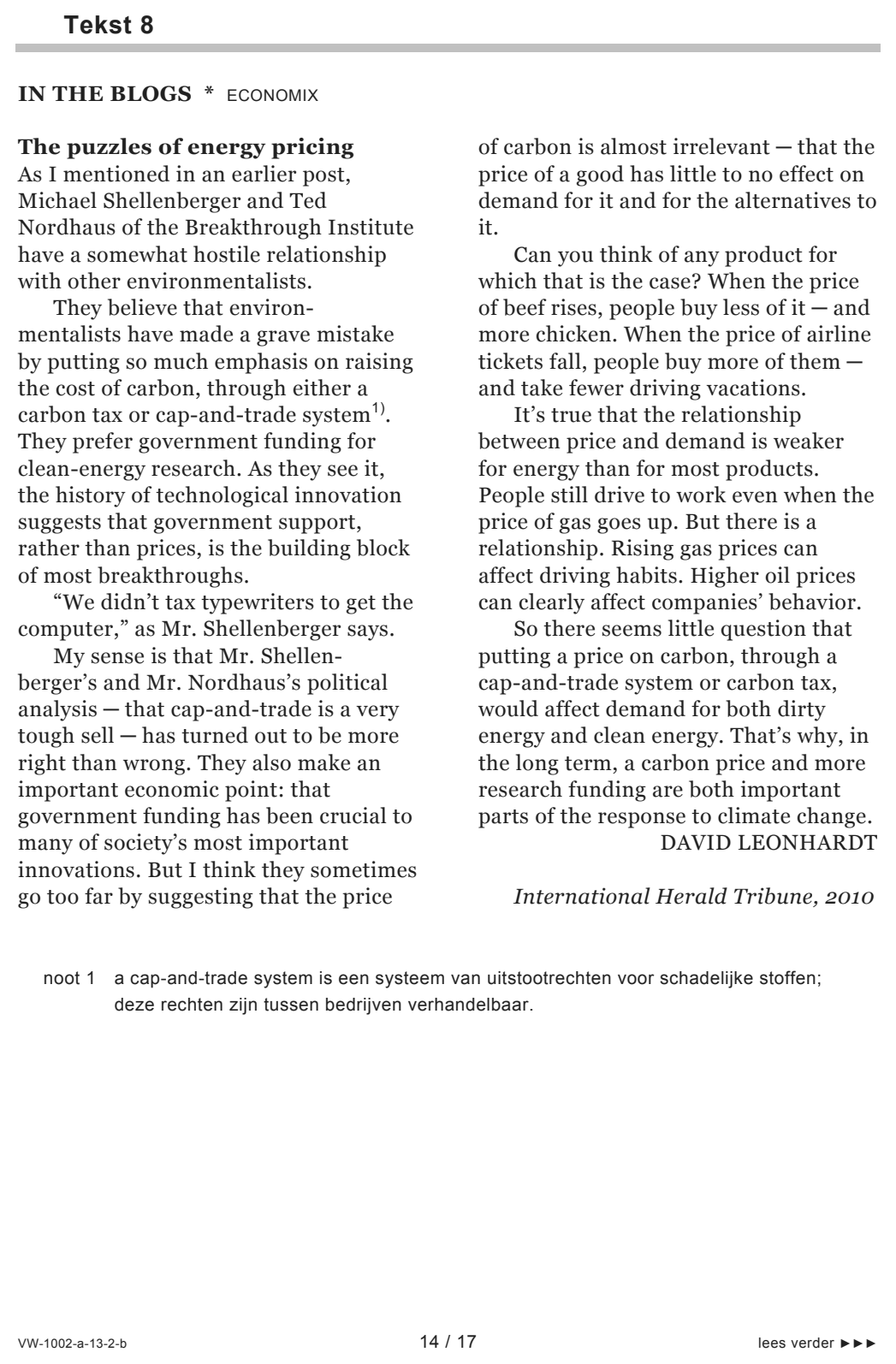
 A safe assumption
 A serious complication
 The anthropocentric angle
 The scientific argument
 To illustrate the range of Wise’s scientific research.
 To lend support to Wise’s line of reasoning.
 To point to the political incorrectness of Wise’s views.
 To show the disputability of Wise’s argumentation.
 are unable to profit from personhood status.
 differ too much from human beings.
 would not live up to human expectations.
 By not restricting his reasoning to the animals highest in intelligence.
 By using an argument on which there is no scientific consensus.
 By using evidence that disproves as much as it proves his position.
 Rattling the Cage explains how the failure to recognize the basic legal
 Rattling the Cage is a must-read for anyone who has an interest in
 Wise is an American lawyer, however, and this is an American
 adjust standard admission requirements for poorer pupils.
 facilitate higher education for pupils who have not been taught proper
 offer better education programmes to pupils from schools with low
 submit poorer pupils to additional university entrance examinations.
 As a result
 Meanwhile
 Paradoxically
 Similarly
 Their admittance to university should depend on a variety of
 They should be enabled to change to independent or good state
 Universities should get funding to offer places to poor students even
 advocates making university admission for poorer pupils more
 seeks to increase the financial strain on poorer pupils’ parents
 wants a lowering of university standards
 Only 1.
 Only 2.
 Both 1 and 2.
 Neither 1 nor 2.
 It defines Dominic Lawson’s stand on the organic movement.
 It elaborates on the reactions evoked by Goldacre’s column.
 It points out the dangers involved in tampering with nature.
 And there is no end to it
 Consider the downside
 Suppose there is no alternative
 Think about it from the other end
 benefits to
 guarantees to
 shock for
 threat to
 The food price explosion during the last few decades.
 The myth that organic food is healthier than regular food.
 The protests referred to in paragraph 2.
 The rapid expansion of the organic movement.
 “His linking of the organic movement with homeopathy is telling.”
 “Such gullibility can have dangerous effects on your health”
 “I realise that publicising Professor Trewavas’s paper might itself
 “A high-fat diet is as bad for you when the food has an “organic”
 more frightened and more aggressive
 more stupid and more powerful
 more vulnerable and more fearsome
 But then
 Consequently
 Even so
 For this reason
 Vanderbilt emphasises the inefficiency of rules and regulations.
 Vanderbilt paints a picture of man’s dilemmas that extend beyond his
 Vanderbilt questions the negative impact of conflicting regulations on
 Vanderbilt underestimates man’s ability to assess complex situations.
 Drivers are apt to ignore speed limits when there is not much traffic.
 Drivers tend to be overconfident of their abilities.
 Fast drivers are more likely to get injured in traffic accidents than slow
 The possibility of being fined does not deter fast drivers.
 afraid of
 attentive to
 complacent about
 adjusts to
 conforms to
 imitates
 interferes with
 Only 1.
 Only 2.
 Only 3.
 Only 1 and 2.
 Only 2 and 3.
 1, 2 and 3.
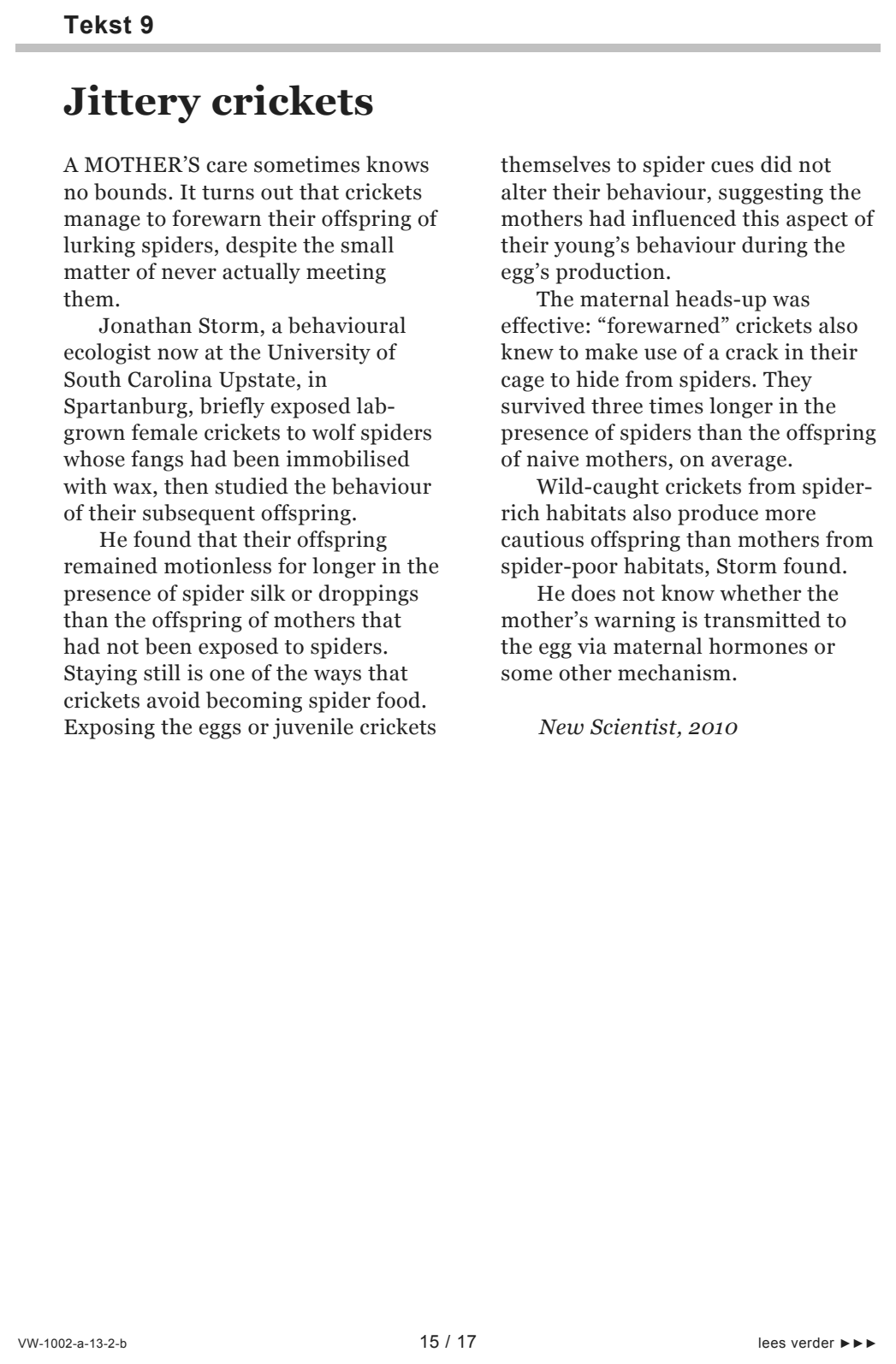
 A fear of spiders makes female crickets more protective of their
 Experience with spiders causes female crickets to instil a fear of
 Young crickets are more alert to spiders when their mothers give off
 Young crickets’ behaviour indicates that they are aware of spiders in
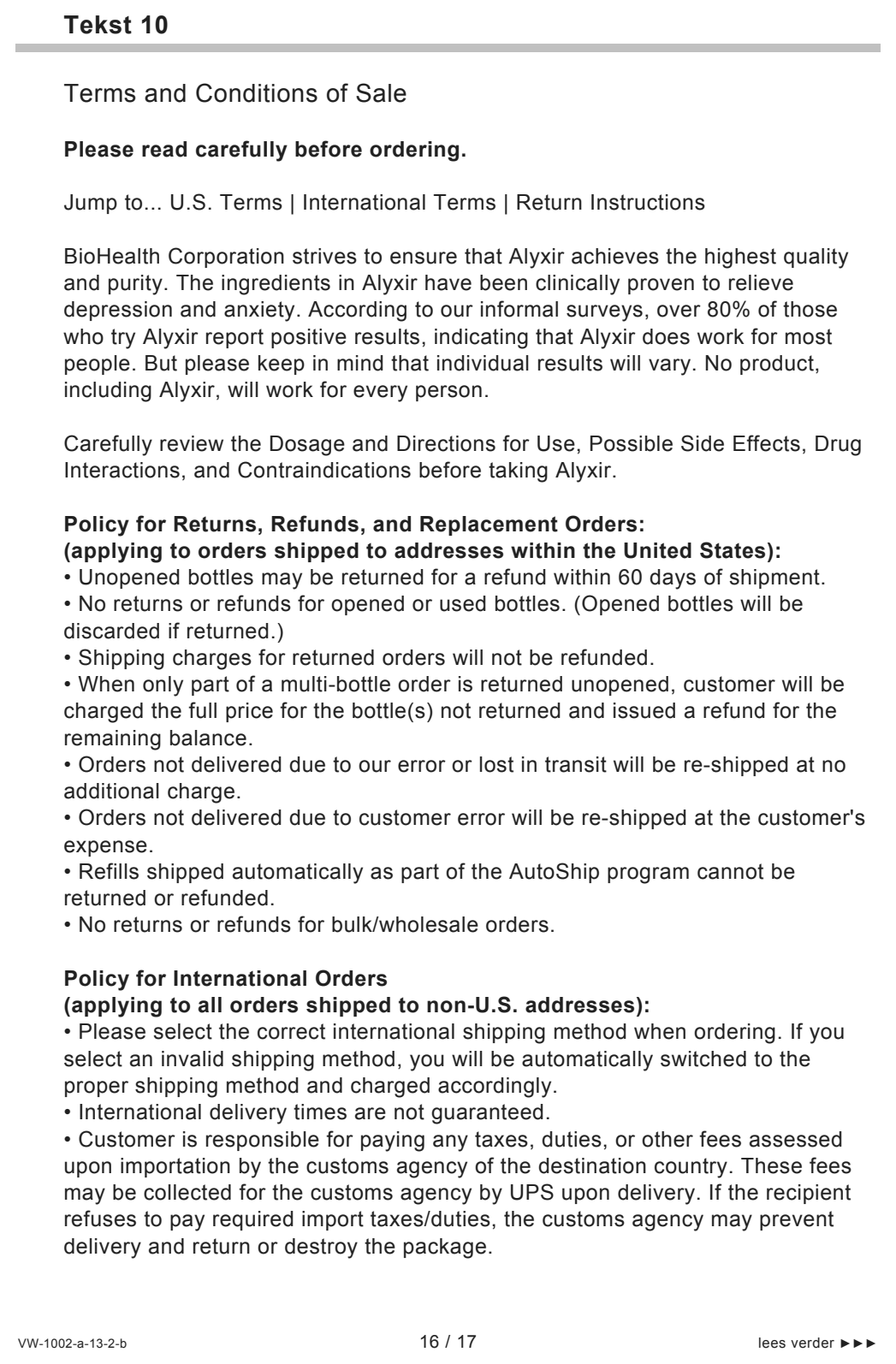
 Wanneer aantoonbaar is dat tevoren alle kosten, inclusief
 Wanneer de douane ten onrechte heeft geweigerd het product toe te
 Wanneer de prijs van het product hoger is dan de transportkosten.
 Wanneer een verzekering voor gegarandeerde aflevering is
De bijlage met informatie bij dit examen, zoals hij gedrukt is.


Bij dit examen hoort geen uitwerkbijlage.
C






E
D
C
D

D
B
C
C
A
B

A
C

B
A
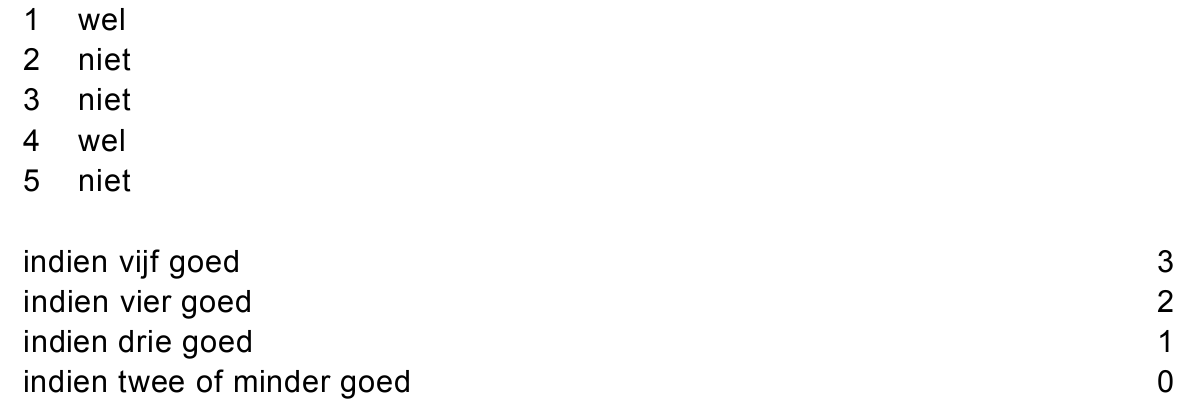
D
A
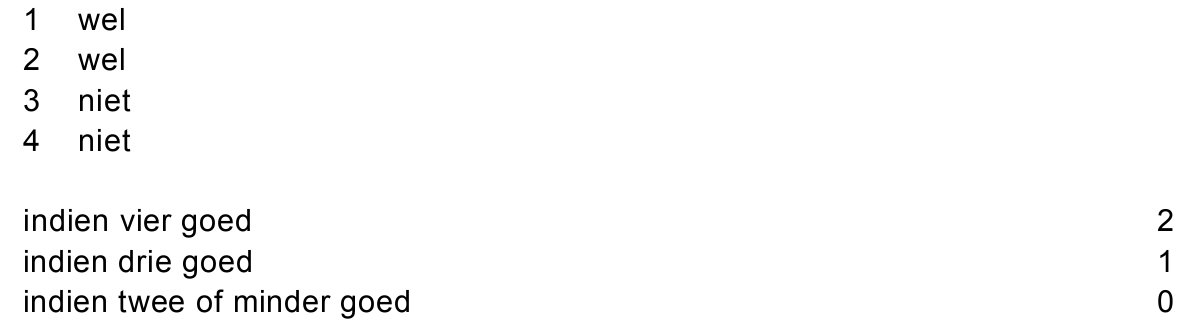
B
C
B
A
B

B
C
D
F
B
C